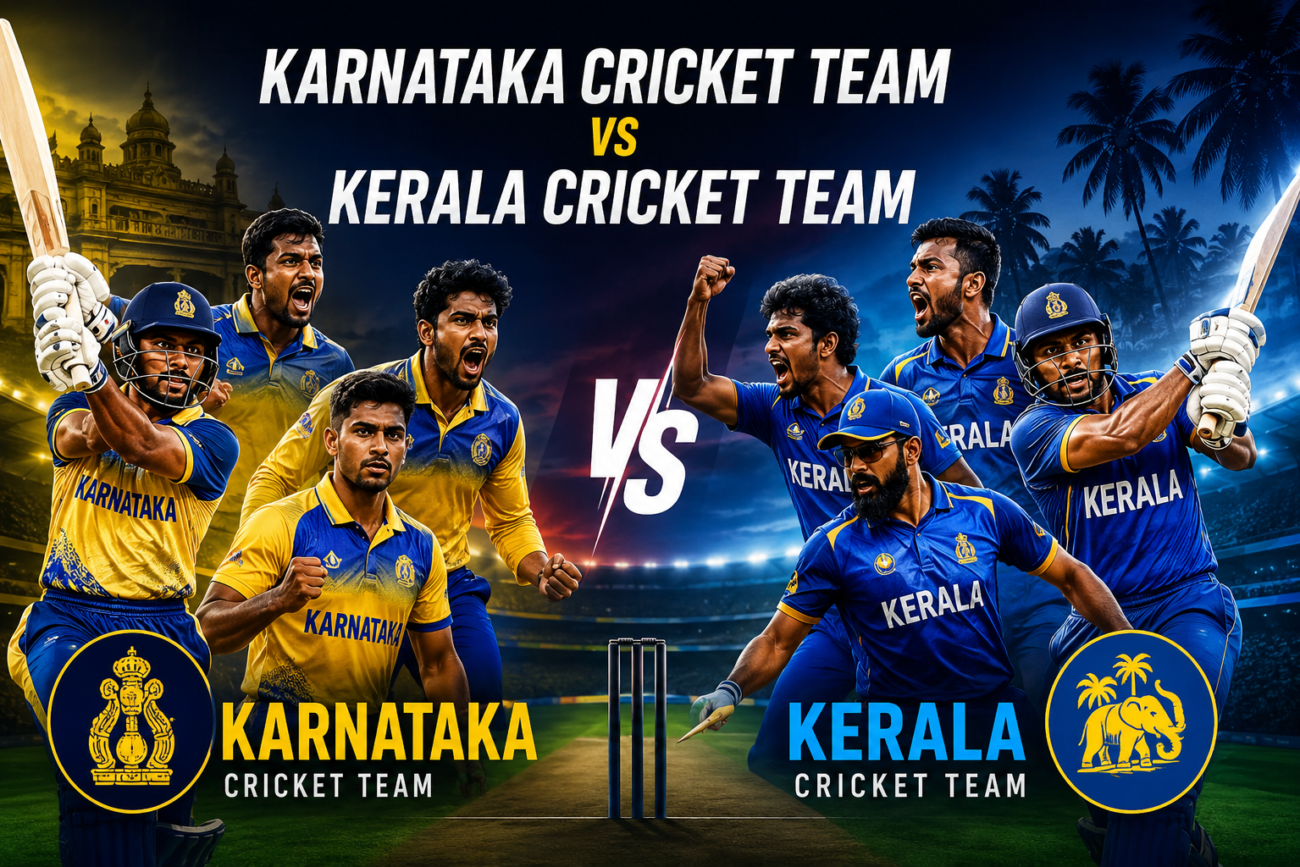
Domestic cricket in India has always been shaped by regional pride, evolving talent, and long standing competitive journeys between state teams. Among these, encounters between two southern sides have often delivered a mix of dominance, rebuilding phases, and rising intensity over time. What started as uneven contests gradually transformed into more balanced battles as one team established early control while the other worked steadily to close the gap. Each meeting brought new performances, tactical changes, and emotional moments that reflected the growth of players and systems. These matches are not just about results but about progression, resilience, and the shifting balance of power across seasons in domestic cricket.
Recent Matches Summary
Match Date
Tournament
Match Venue
Format
Toss Winner
Match Winner
Victory Margin
26 Dec 2025
Vijay Hazare Trophy
Motera
One Day
Karnataka
Karnataka
8 Wickets
01 Nov 2025
Ranji Trophy
Bengaluru
First Class
Karnataka
Karnataka
Innings and 164 Runs
23 Nov 2023
Vijay Hazare Trophy
Ahmedabad
One Day
Kerala
Karnataka
7 Wickets
13 Oct 2022
Syed Mushtaq Ali
Mohali
T20
Kerala
Karnataka
4 Wickets
08 Dec 2021
Vijay Hazare Trophy
Jaipur
One Day
Kerala
Kerala
6 Wickets
14 Dec 2019
Ranji Trophy
Hubli
First Class
Kerala
Karnataka
6 Wickets
24 Jan 2019
Syhed Mushtaq Ali
Cuttack
T20
Karnataka
Karnataka
9 Wickets
Team Statistics Summary
Team Name
Format
Matches Head to Head
Total Matches Won
Total Matches Lost
Matches Drawn
Highest Team Score
Karnataka
First Class
14
8
1
5
586
Kerala
First Class
14
1
8
5
451
Karnataka
List A One Day
9
7
2
0
285
Kerala
List A One Day
9
2
7
0
284
Karnataka
Twenty20
5
4
1
0
181
Kerala
Twenty20
5
1
4
0
165
Total Overall
All Formats Combined
28
19
4
5
586
Individual Batting Records
Player Name
Representing Team
Match Format
Total Innings
Total Runs Scored
Highest Match Score
Batting Strike Rate
Karun Nair
Karnataka
First Class
4
412
233
59.88
Smaran Ravichandran
Karnataka
First Class
1
220
220
56.41
Devdutt Padikkal
Karnataka
List A One Day
3
215
124
90.51
Baba Aparajith
Kerala
First Class
2
194
88
52.15
Mohammed Azharuddeen
Kerala
List A One Day
2
145
84
128.27
Rohan Kunnummal
Kerala
Twenty20
2
98
61
134.24
Manish Pandey
Karnataka
Twenty20
3
92
48
122.66
Individual Bowling Records
Bowler Name
Representing Team
Match Format
Overs Bowled
Total Wickets Taken
Best Bowling Innings
Economy Rate
Mohsin Khan
Karnataka
First Class
24
7
6 for 29
1.88
Vidwath Kaverappa
Karnataka
First Class
38
6
4 for 42
1.84
Shreyas Gopal
Karnataka
List A One Day
20
5
3 for 41
4.90
Vijaykumar Vyshak
Karnataka
First Class
29
4
3 for 62
2.55
Abhilash Shetty
Karnataka
List A One Day
10
3
3 for 59
5.90
Akhil Scaria
Kerala
List A One Day
15
2
1 for 44
5.42
Nedumankuzhy Basil
Kerala
First Class
31
2
2 for 101
3.25
Early Foundations of South Indian Cricket Rivalry
The early phase of domestic cricket in southern India saw two teams developing in very different environments. One side had a strong foundation built through structured academies, experienced coaching systems, and exposure to high-level competitions. The other side was still finding its identity, focusing on nurturing raw talent from local circuits. When these two sides began interacting in tournaments, the difference in preparation was clearly visible. Matches often leaned heavily toward one direction, with experienced players controlling sessions through discipline and patience. However, even in early defeats, the emerging side showed glimpses of fighting spirit. Fielding intensity and moments of resistance from lower order batters hinted at future potential. These early encounters quietly laid the groundwork for a competitive story that would grow stronger over time, driven by ambition, learning, and gradual improvement across seasons in domestic cricket structures.
Season
Matches
Wins Team A
Wins Team B
Early Phase
3
3
0
Transition
4
3
1
Development
5
4
1
Growth Stage
6
4
2
First Encounters That Set the Tone
The initial meetings between these two domestic sides created a clear picture of contrast in execution and temperament. One team entered the field with confidence shaped by consistent domestic success, while the other approached with determination to prove itself on a bigger stage. These matches often saw early breakthroughs that put pressure on inexperienced batters, forcing collapses in key moments. Despite that, there were innings where resistance emerged, especially from the middle order, showing that the gap was not permanent. Bowlers on both sides began to understand each other’s strengths, adjusting lengths and strategies accordingly. These early battles were not just about results but about learning patterns, reading conditions, and adapting to pressure. Over time, these encounters built emotional intensity among players and supporters, creating anticipation every time the teams were scheduled to meet in domestic competitions.
Match Type
Venue Type
Dominant Side
Key Factor
Group Stage
Home Ground
Experienced Unit
Early wickets
League Match
Away Ground
Experienced Unit
Batting depth
Knockout
Neutral Venue
Balanced Control
Bowling spell
Return Match
Home Ground
Experienced Unit
Field pressure
Domestic Supremacy Era
During a significant phase of domestic competitions, one team established itself as a dominant force through consistent performances across formats. Strong top-order batting ensured stable starts, while the middle order converted those starts into commanding totals. The bowling unit complemented this dominance with disciplined line and length, rarely allowing opposition batters to settle. In contrast, the developing side struggled to maintain partnerships and often lost momentum during critical phases of the game. Fielding standards also played a crucial role, as sharper catching and ground coverage added pressure on the opposition. This era highlighted the importance of experience, preparation, and squad depth. However, even under pressure, the emerging team continued to evolve, learning from each defeat and slowly building resilience. These matches became lessons in structure, execution, and the value of consistency at the domestic level.
Season
Average Score
Wickets Taken
Close Matches
Phase 1
280
45
1
Phase 2
310
52
2
Phase 3
295
48
2
Phase 4
320
55
3
Kerala Rise and Rebuilding Phase
A major shift began when the developing side focused heavily on rebuilding its domestic structure. Investment in youth development programs and better coaching support started producing promising results. Young players began stepping into key roles with confidence, especially in bowling departments where disciplined attacks started restricting strong batting units. Batters also showed improved temperament, playing longer innings and reducing unnecessary risks. Fielding standards improved significantly, making it harder for opponents to score freely in crucial overs. This phase marked a turning point where competitiveness increased noticeably. Even though results were not always favorable, the margin of defeat reduced, signaling clear progress. Matches became more balanced, and opposition teams could no longer dominate easily. The rebuilding phase created a foundation for future competitiveness and brought renewed hope for supporters who had long waited for stronger performances.
Development Stage
Batting Avg
Bowling Economy
Fielding Efficiency
Early Rebuild
Low
High
Moderate
Mid Rebuild
Improving
Stable
Good
Advanced Phase
Strong
Better
Very Good
Competitive Phase
Consistent
Controlled
Excellent
Turning Point Matches That Changed Momentum
Certain matches completely shifted the perception of competitiveness between the two sides. In these encounters, the developing team challenged expectations by pushing experienced opponents into pressure situations. One or two standout performances from batters turned games that seemed lost into competitive battles. Bowlers also delivered impactful spells, especially in the middle overs where breakthroughs changed the flow of matches. These turning points were often defined by small margins, such as a crucial dropped catch or a late partnership that shifted momentum. Emotional intensity increased among players as confidence began to grow. Supporters witnessed for the first time that outcomes were no longer predictable. These matches became symbolic of progress, proving that consistent effort and strategic improvement could bridge long-standing gaps in performance levels.
Match Phase
Key Moment
Impact Player
Result Shift
First Innings
Early wickets
Bowler A
Pressure built
Middle Overs
Partnership
Batter B
Momentum shift
Final Phase
Breakthrough
Bowler C
Game changed
Closing Overs
Fielding effort
Team unit
Narrow finish
Batting Battles and Player Performances
Batting contests between these teams have often defined match outcomes, with top-order players playing crucial roles in setting the tone. Experienced batters from the stronger side typically focused on building long innings, rotating strike, and capitalizing on loose deliveries. On the other hand, emerging batters showed aggressive intent, especially when trying to counter early pressure. Middle-order contributions became vital in stabilizing innings after early setbacks. Several innings stood out due to their timing and impact rather than just volume of runs. Partnerships often determined control of matches, especially in longer formats where patience and discipline mattered. Over time, these batting battles became more balanced, with both sides producing match-winning performances. The evolution of shot selection and strike rotation highlighted growing maturity in domestic cricket standards.
Batter Type
Average Runs
Strike Rate
Key Strength
Top Order
High
Controlled
Stability
Middle Order
Moderate
Flexible
Recovery
Lower Order
Low
Aggressive
Quick runs
All Rounders
Balanced
Dynamic
Versatility
Bowling Duels and Tactical Execution
Bowling strategies played a decisive role in shaping outcomes between these teams. The stronger side traditionally relied on disciplined pace attacks and experienced spin combinations to control scoring rates. Consistent line and length created pressure, forcing batters into mistakes. Meanwhile, the improving side developed a more aggressive bowling approach, focusing on wicket-taking deliveries rather than just containment. This included variations in pace, smarter field placements, and better use of pitch conditions. Tactical adjustments became more visible as captains learned to rotate bowlers effectively during crucial phases. Death overs often decided matches, with execution under pressure becoming a key factor. Over time, bowling duels became more competitive, reflecting the narrowing gap between both teams. These tactical battles added depth to the rivalry and showcased evolving cricket intelligence at the domestic level.
Bowling Phase
Strategy Used
Success Rate
Key Outcome
Powerplay
Attack
High
Early wickets
Middle Overs
Control
Medium
Pressure build
Death Overs
Variations
High
Match impact
Final Overs
Defensive
Medium
Run control
Conclusion
Over the years, this domestic rivalry has grown into a compelling cricketing journey defined by dominance, learning, and eventual competitiveness. One side’s early superiority set the benchmark, while the other’s gradual rise added depth and unpredictability to future encounters. Key performances, tactical adjustments, and breakthrough moments have all contributed to shaping this evolving contest. Today, matches between these teams reflect a healthier balance, where outcomes are no longer one sided and every game carries genuine uncertainty. This rivalry now stands as a strong example of how domestic cricket develops through persistence, adaptation, and continuous improvement across seasons.